The best portable projectors range from pocket-size models to smart home cinema units, so portability can mean very different things. Choose based on where you will use it, how you plan to stream, and whether you need a screen or simpler setup controls.
Quick Top Products
TMY 4K Projector with WiFi Bluetooth
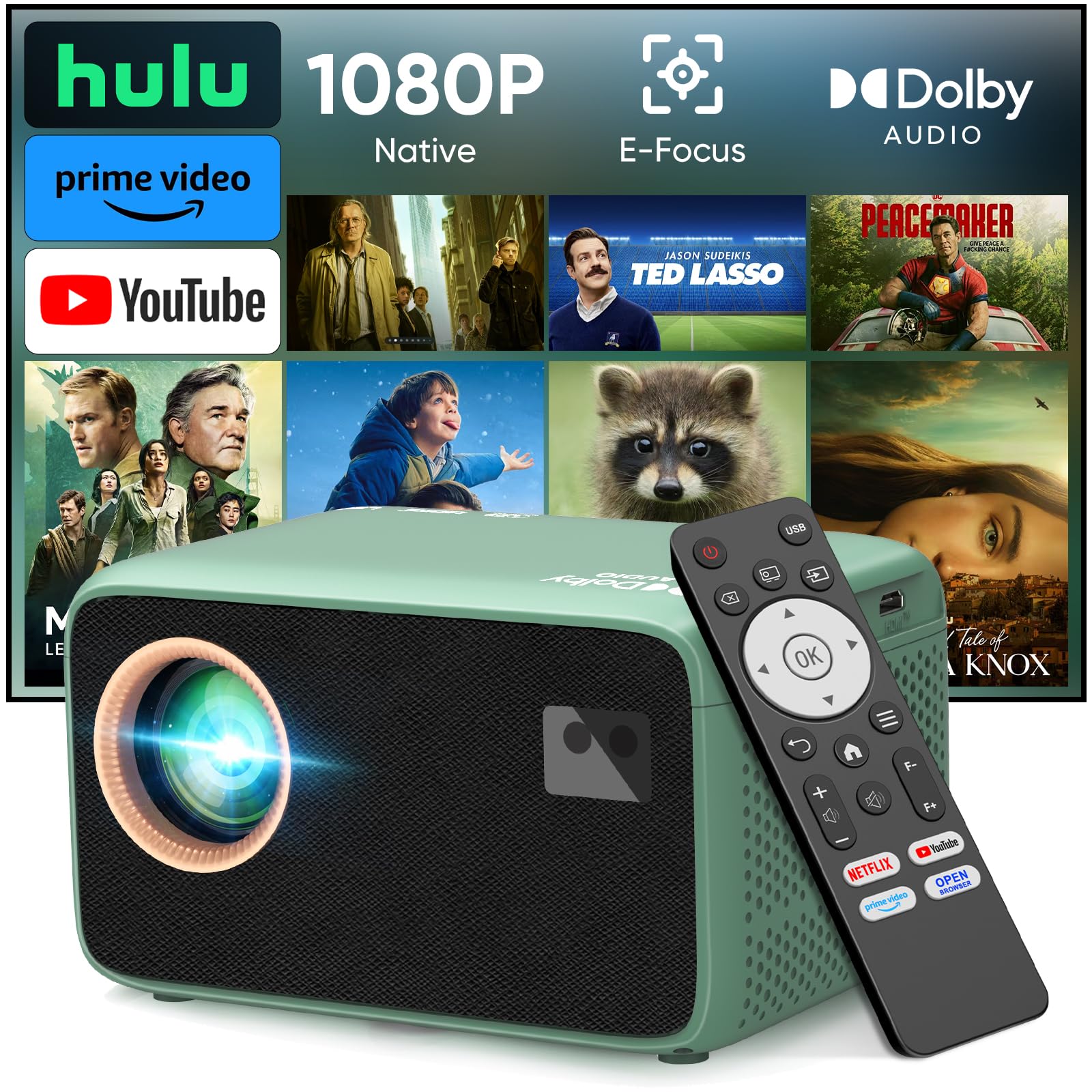
- Preinstalled streaming apps include Netflix, Prime Video, and YouTube.
- Native resolution is 1080P, with 1500 ANSI lumens noted.
- Auto keystone and remote focus help with setup.
Best For: People who want built-in streaming apps and a compact projector for home, camping, or backyard movie nights.

Lisowod L02 Smart Projector
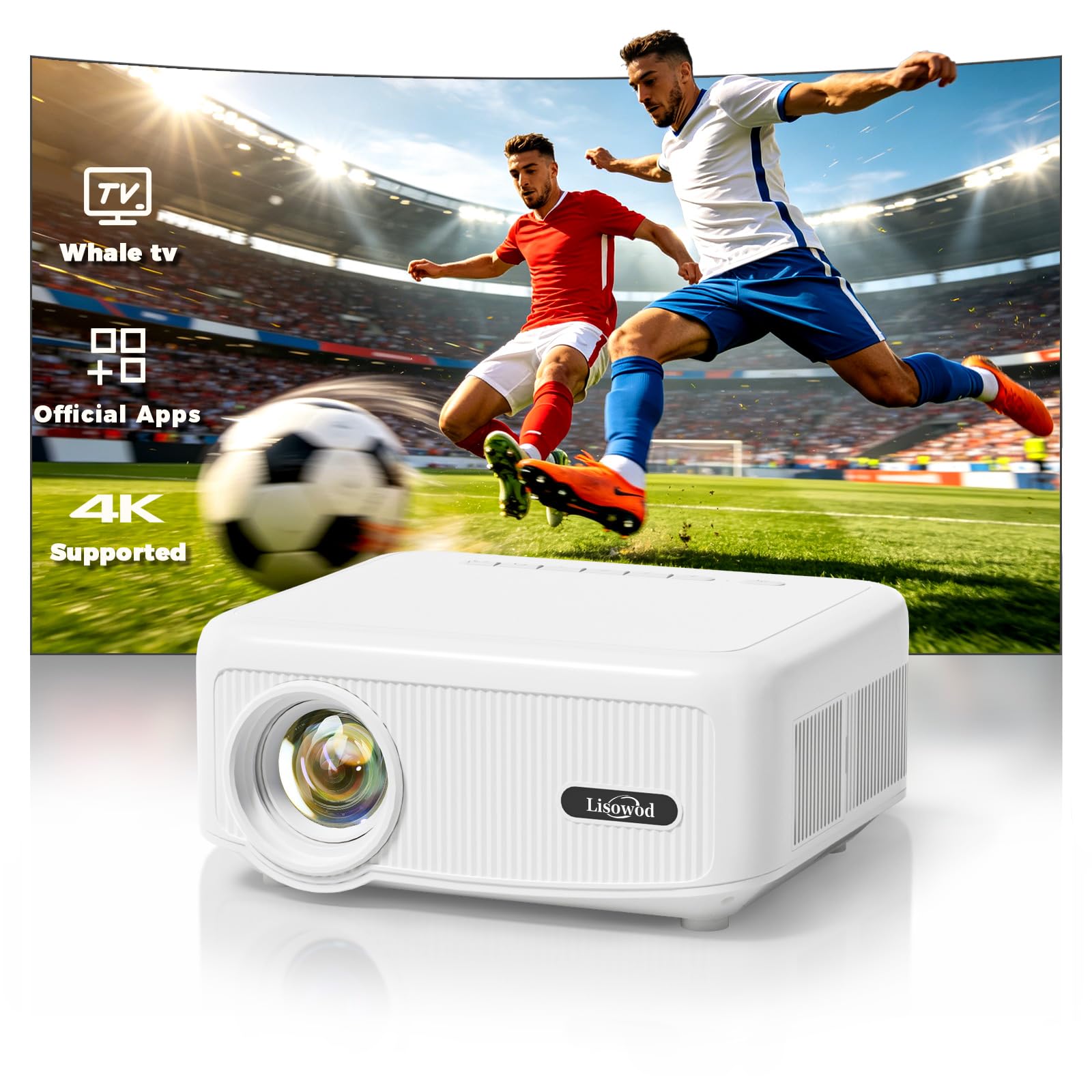
- Native app access includes Netflix, YouTube, and Hulu.
- It supports native 1080P and 4K video decoding through HDMI.
- Electric focus and auto keystone support adjustment from a distance.
Best For: Viewers who want native streaming apps, phone mirroring, and remote focus and keystone adjustments.
TMY 1080P Full HD Portable Mini Projector
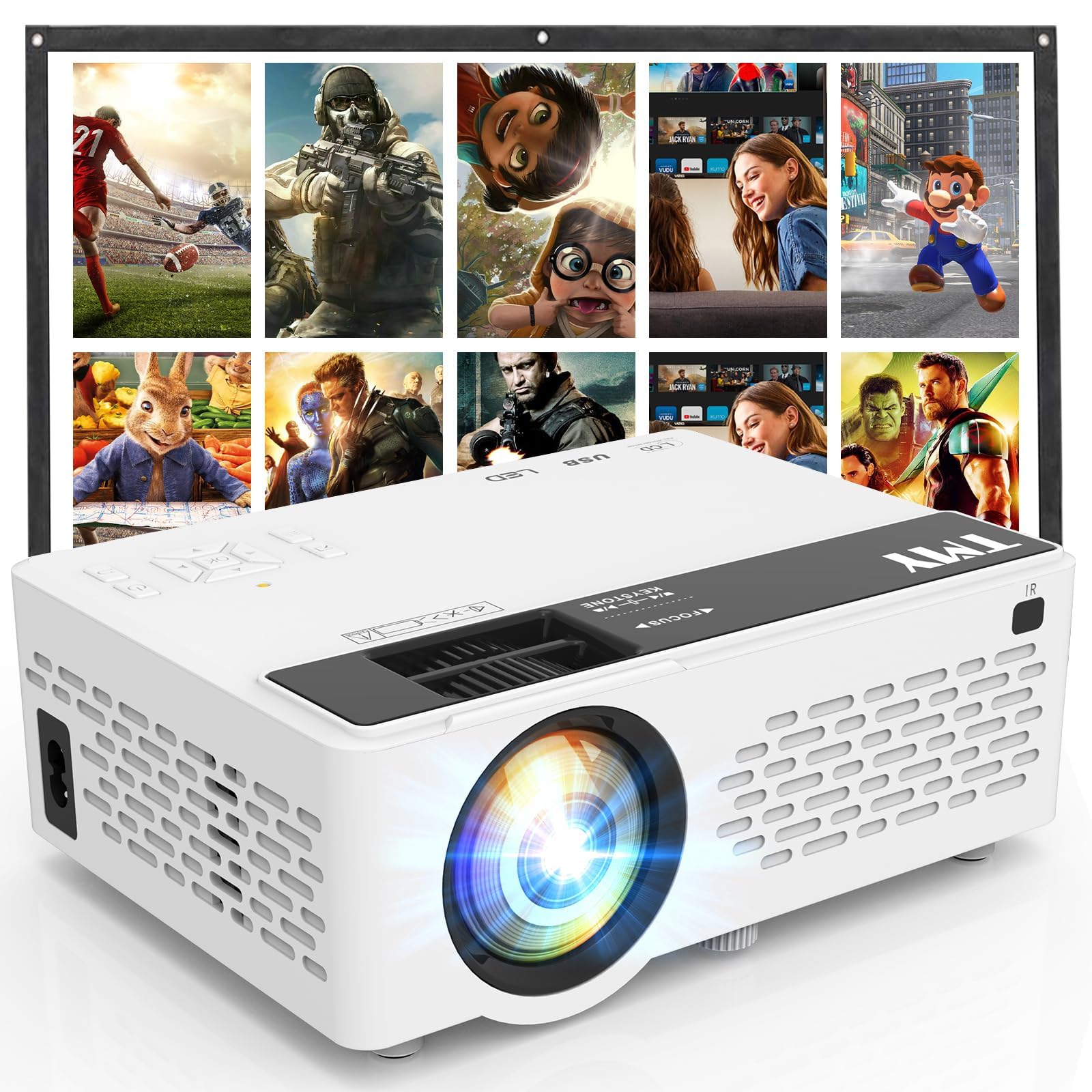
- An 80-inch foldable projector screen is included.
- It supports 1080P Full HD video.
- Bluetooth can connect speakers or switch to speaker mode.
Best For: Buyers setting up occasional indoor or backyard movie nights who want a screen included in the package.
Kodak Ultra Mini Portable Projector
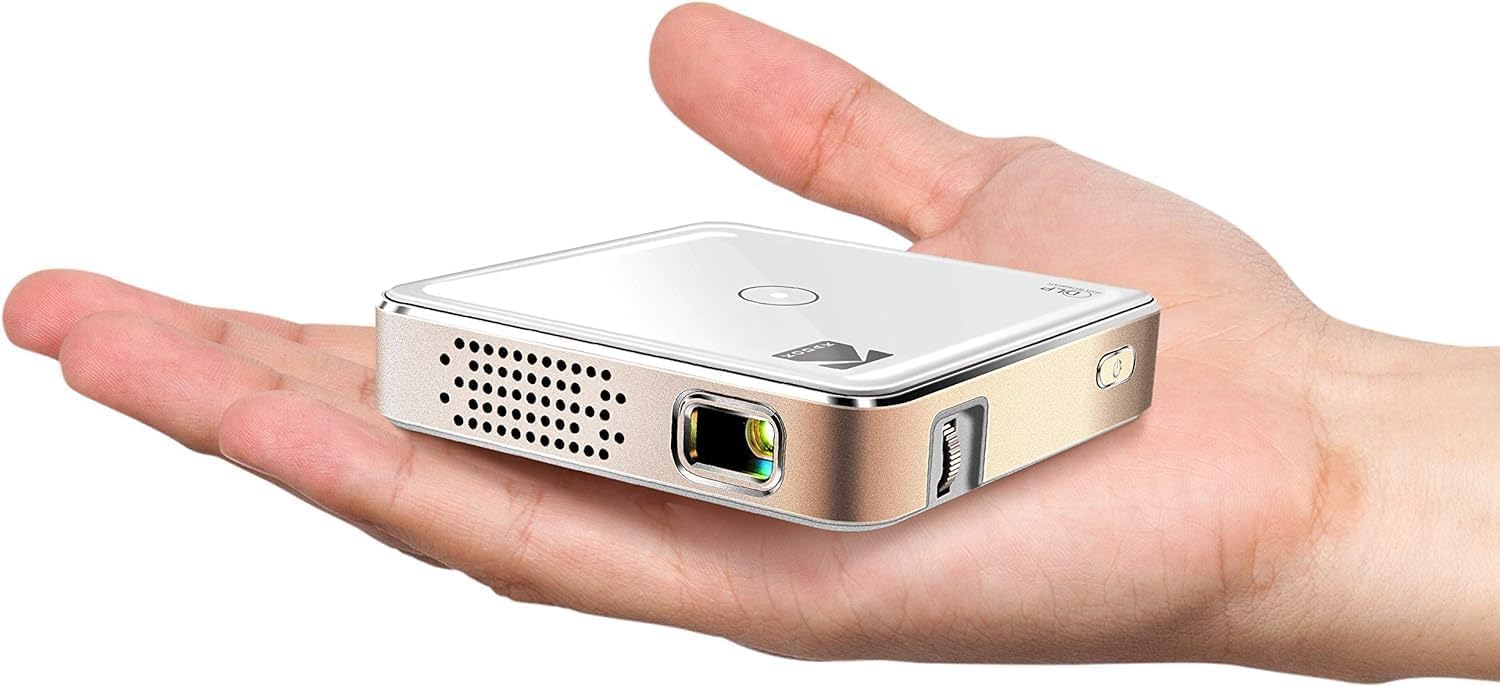
- Its pocket-size design is intended for easy carrying.
- Connections include HDMI, USB, and MicroSD.
- It performs best in dark to dim-lit rooms.
Best For: People who prioritize a very small projector for occasional use in dark or dim rooms.
Optoma GT2000HDR Ultra-Compact Short Throw Projector
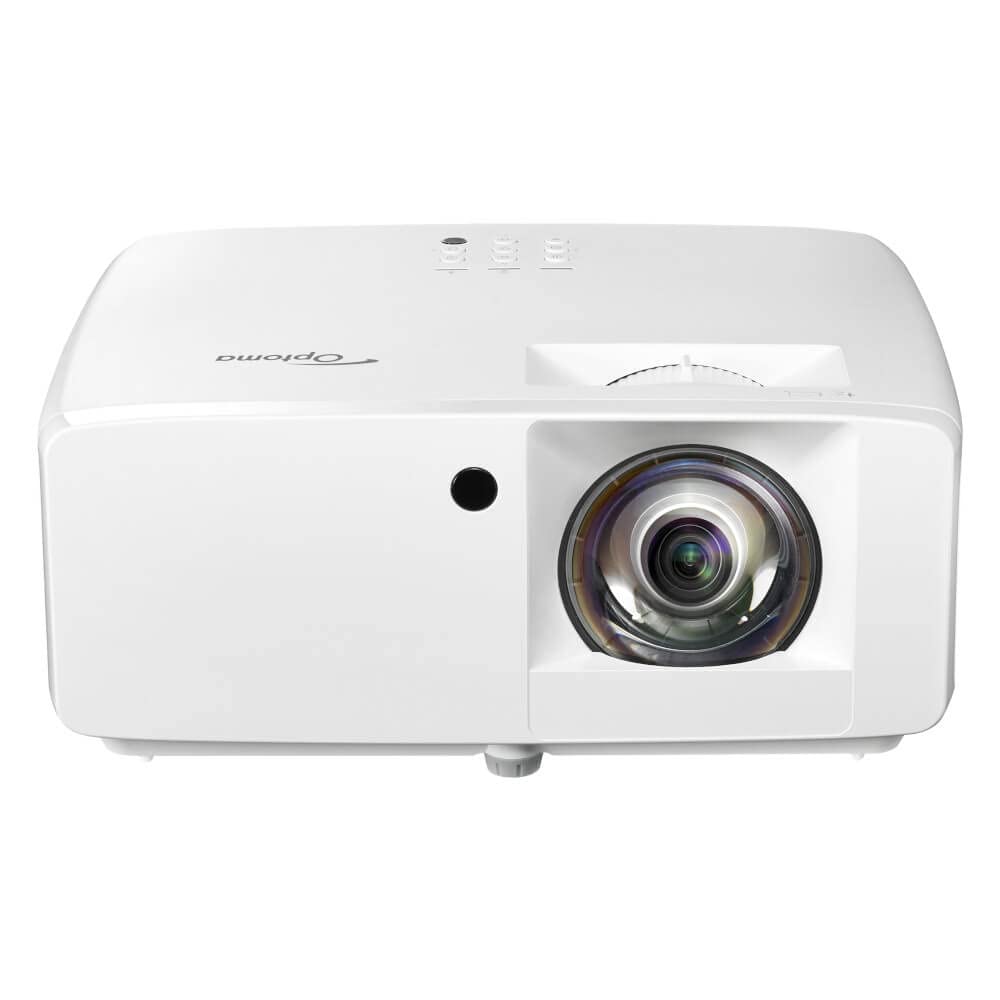
- It is an ultra-compact short-throw home laser projector.
- The catalog title specifies 3500 lumens and 1080p.
- The notes mention an external power supply.
Best For: Home viewers looking for a compact short-throw laser projector for a room-based installation.
Smart Streaming for Trips
TMY 4K Projector with WiFi Bluetooth, Compatible with Netflix/Prime Video/YouTube, Outdoor Portable Home Theater Movie Projector, Smart Projector for Indoor Outdoor Movies, Gaming and Camping (Green)
This TMY projector combines a compact design with built-in WiFi and Bluetooth, preinstalled Netflix, Prime Video, and YouTube, plus HDMI and USB connections. Its listed native resolution is 1080P, while 4K video decoding is not specified in the product title or notes.
Auto keystone correction and fast remote focus can make setup easier when moving between rooms or outdoor spots. The notes also give an image size of up to 300 inches, but that maximum alone does not establish the best viewing distance or brightness in a particular space.
It suits buyers who want streaming and portable use in one device.
Best For: People who want built-in streaming apps and a compact projector for home, camping, or backyard movie nights.
| Pros | Cons |
|---|---|
|
|
Choose this model if you want an all-in-one projector that can stream from built-in apps and move between indoor and outdoor movie setups. The combination of WiFi, Bluetooth, HDMI, and USB offers several connection routes.
Before buying, check its physical size and power needs if you plan to carry it camping; the compact design is not accompanied by weight or battery details. Also distinguish 4K decoding support from its stated native 1080P resolution.
Flexible App and Casting Setup
Outdoor Projector [Ultra Brightness & Official Apps] Movie Projector 4K, Electric Focus & 4P Keystone, Lisowod L02 Smart Projector with WiFi and BT, Portable Proyector for Backyard & Home Cinema
The Lisowod L02 is a smart projector built around app access and flexible setup. Its notes list native Netflix, YouTube, and Hulu compatibility, WiFi 6, Bluetooth 5.4, electric focus, and auto vertical keystone correction.
It supports native 1080P and 4K video decoding through HDMI, so the 4K wording does not mean native 4K resolution. The product notes describe an image up to 300 inches and 1900 brightness, though they do not identify a brightness unit.
That makes it a feature-rich option for home or backyard use, while its actual portability is harder to judge without dimensions or weight.
Best For: Viewers who want native streaming apps, phone mirroring, and remote focus and keystone adjustments.
| Pros | Cons |
|---|---|
|
|
This is a fit for buyers who value app access and convenient remote adjustments more than pocket-size portability. The built-in apps, WiFi 6, and Bluetooth 5.4 make it suited to a home setup that may also move outdoors.
Check its actual dimensions and power requirements before planning to travel with it. Its notes call the image native 1080P and describe 4K decoding over HDMI, so buyers seeking native 4K should verify that distinction.
Includes a Foldable Movie Screen
TMY 1080P Full HD Portable Mini Projector, Bluetooth Movie Projector, Compatible with TV Stick/Smartphone/PC/Game Console/HDMI/USB, Indoor & Outdoor Use, with Projector Screen
The TMY V08 pairs a portable mini projector with an 80-inch foldable projection screen, giving buyers a ready-made surface for movie nights or camping. It supports 1080P Full HD and offers HDMI and USB inputs for sources such as laptops, game consoles, and streaming sticks.
Bluetooth can connect external speakers, and the projector can also operate in Bluetooth speaker mode. Phone and tablet connections may require an HDMI adapter, which is not included.
This is a practical choice for a simple portable setup, though the notes do not provide a weight, built-in battery, or brightness figure to help assess travel convenience or daytime use.
Best For: Buyers setting up occasional indoor or backyard movie nights who want a screen included in the package.
| Pros | Cons |
|---|---|
|
|
Consider this model if you want a projector and screen in one purchase for occasional indoor or outdoor viewing. HDMI and USB cover common wired sources, while Bluetooth offers an audio option without a cable.
The screen is 80 inches, but the projector's supported image range is broader; confirm that the included screen suits your intended setup. Phone connections need a separate HDMI adapter, and the lack of weight or battery details makes it difficult to assess for trips where every item needs to be carried.
Pocket-Size HDMI and Media Playback
Kodak Ultra Mini Portable Projector - HD 1080p Support LED DLP Rechargeable Pico - 100 Display Built-in Speaker - HDMI USB and Micro SD - Compatible with iPhone iPad Android Phones"
Kodak's Ultra Mini is a pico projector designed to fit in a handbag, briefcase, or pocket. It uses a DLP optical engine, supports 1080p input, and includes HDMI, USB, and MicroSD connections alongside a built-in speaker and 3.5mm input.
The notes say it performs best in a dark to dim-lit room, a key consideration for movie use. They also mention rechargeable operation in the title, but do not provide battery runtime.
Its small format favors easy packing and flexible connections; buyers should weigh that convenience against the need for controlled room lighting and the limited brightness information available.
Best For: People who prioritize a very small projector for occasional use in dark or dim rooms.
| Pros | Cons |
|---|---|
|
|
Choose the Kodak when compact carrying size is the leading priority and you can control the room lighting. Its HDMI, USB, and MicroSD connections give it flexibility for different sources, and the built-in speaker is useful for a simple setup.
It is less suited to buyers who need dependable viewing in bright spaces: the notes identify dark or dim rooms as the best conditions. Check battery runtime and your intended device's HDMI compatibility before relying on it away from an outlet.
Short-Throw Laser for a Fixed Room
Optoma GT2000HDR Ultra-Compact Short Throw Full HD Home Laser Projector
The Optoma GT2000HDR is a short-throw Full HD home laser projector in an ultra-compact form. Its catalog title specifies 3500 lumens and 1080p, while the notes highlight an eco-friendly design and external power supply.
The short-throw designation can suit a room where the projector needs to sit closer to the projection surface, but the supplied details do not include a throw ratio, dimensions, or setup distance. It is therefore more of a compact home installation option than a clearly travel-ready device.
Buyers considering it for portable use should check how its placement and power setup match the rooms they plan to use.
Best For: Home viewers looking for a compact short-throw laser projector for a room-based installation.
| Pros | Cons |
|---|---|
|
|
This model fits buyers looking for a short-throw laser projector for a home viewing space, especially if the installation needs to keep the projector near the screen. The 3500-lumen figure and 1080p resolution provide useful headline specifications.
Its portable label is less informative without weight, dimensions, throw ratio, or battery details. Before choosing it for travel, confirm the placement distance and power arrangement; its external power supply points toward planning around an outlet.
How to Choose Portable Projectors
How We Picked Best Portable Projectors
These five candidates cover distinct interpretations of portable projection: a pocket-size pico unit, mini models with a screen or wired inputs, smart projectors with built-in apps, and a compact short-throw laser option. We favored products with a clear use case supported by their connection, setup, resolution, or included-screen details.
Portability claims alone do not establish carry weight, battery runtime, or suitability for every room, so those unknowns remain part of the buying decision.
The group also spans simple HDMI playback and app-centered viewing. That makes it easier to choose around your main constraint, whether that is packing size, avoiding a separate streaming device, or fitting a projection setup into a particular room.
Comparing Portable Projector Types
The Kodak is the clearest pocket-first option, with HDMI, USB, and MicroSD connections, but it is best used in dark or dim rooms. The TMY V08 includes an 80-inch screen and offers HDMI, USB, and Bluetooth, while phone use needs a separate HDMI adapter.
Those details suit a straightforward movie setup where you want a surface included.
The TMY smart projector and Lisowod L02 add built-in apps and wireless connections. The TMY notes give native 1080P and 1500 ANSI lumens; the Lisowod lists native 1080P, electric focus, auto keystone, WiFi 6, and Bluetooth 5.4, with a brightness figure that has no unit.
The Optoma instead emphasizes short-throw laser projection and 3500 lumens for home placement.
| Product | Standout features | Best for |
|---|---|---|
| TMY 4K Projector with WiFi BluetoothCheck Price |
| People who want built-in streaming apps and a compact projector for home, camping, or backyard movie nights. |
| Lisowod L02 Smart ProjectorCheck Price |
| Viewers who want native streaming apps, phone mirroring, and remote focus and keystone adjustments. |
| TMY 1080P Full HD Portable Mini ProjectorCheck Price |
| Buyers setting up occasional indoor or backyard movie nights who want a screen included in the package. |
| Kodak Ultra Mini Portable ProjectorCheck Price |
| People who prioritize a very small projector for occasional use in dark or dim rooms. |
| Optoma GT2000HDR Ultra-Compact Short Throw ProjectorCheck Price |
| Home viewers looking for a compact short-throw laser projector for a room-based installation. |
Choosing a Portable Projector for Travel
For camping or outdoor movie nights, check weight, dimensions, power needs, and whether the projector has a built-in battery. Those details are not available for most of these candidates, so compact or portable wording does not by itself tell you how convenient they are to pack.
The Kodak is explicitly palm-sized, and the TMY V08 comes with a foldable screen, but both still require you to plan for their power and connection setup.
Outdoor projection also depends on light around the screen. Kodak's notes favor dark to dim-lit rooms, while the TMY smart model gives a 1500 ANSI lumen figure.
Treat the latter as a listed specification, not a guarantee that a large image will remain clear in daylight. A shaded evening setup is a more grounded use case than assuming a projector will overcome direct sun.
Streaming, Connections, and Setup
Built-in streaming apps are convenient when you would rather travel without a separate stick. The TMY smart model includes Netflix, Prime Video, and YouTube, while the Lisowod lists Netflix, YouTube, and Hulu.
WiFi and Bluetooth broaden placement and audio options, but check which connection your phone, laptop, or console actually needs.
HDMI and USB remain useful for devices that do not rely on projector apps. The Kodak adds MicroSD playback, and the TMY V08 includes both HDMI and USB.
Focus and keystone controls matter when the projector cannot sit square to the screen: the Lisowod offers electric focus and auto keystone, while the TMY smart model lists auto keystone and fast remote focus.
Who Should Buy Which Portable Projector
Choose the Kodak if fitting a projector in a bag or pocket matters most and you can use it in a dim room. Pick the TMY V08 if you want an included 80-inch screen and plan to connect a source over HDMI or USB.
Choose the TMY smart model for preinstalled streaming apps and a stated ANSI brightness figure; consider the Lisowod if remote focus, keystone adjustments, and its listed app support suit your setup.
The Optoma is the more room-oriented choice for someone prioritizing short-throw laser projection and a stated 3500-lumen figure. Before buying any of these for frequent travel, confirm dimensions, weight, and power requirements.
If native resolution matters, separate native 1080P from 4K video decoding when comparing models.